今号の内容/IN THIS ISSUE
01 巻頭挨拶 | Message from the Chair
02 2026年総会開催および理事長・副理事長からのご挨拶 | 2026 Annual General Meeting -Message from the Chair and Vice Chairs
03 対話を支える方法 | The Methods Behind Dialogue
04 地域の経験を未来へ残す | Preserving Local Experience for the Future
05 最近の活動 | Recent Developments at Fukushima Dialogue
06 あとがき | Final Thoughts
01 巻頭挨拶|Message from the Chair
この夏は、日本各地で豪雨による被害が相次いでいます。被災された皆様に、心よりお見舞い申し上げます。
日本は世界的に見ても、自然災害が多い国です。その割に教訓から学ぶことは苦手で、避難所の運営が1930年代と変わらないままであることが、近年大きな問題とされています。原子力災害でも同様で、各種の規制は強化されたものの、事故の全容を記憶にとどめ、それを教訓として社会の改善に生かそうとする機運は乏しいと感じます。
こうした流れに抗い、福島での経験から社会を少しでも良くするものを生み出していくことも、NPO福島ダイアログが目指していきたいことの一つです。
NPO福島ダイアログ理事長 安東量子
This summer, many parts of Japan have once again been affected by severe flooding caused by heavy rainfall. I would like to express my heartfelt sympathy to all those who have been affected.
Japan is one of the countries in the world most prone to natural disasters. Yet, despite our repeated experience of disasters, we have not always been good at learning from the lessons they leave behind. In recent years, it has been widely pointed out that conditions and practices in evacuation shelters have changed remarkably little since the 1930s. The same can be said of nuclear disasters. Although various regulations have been strengthened since the Fukushima Daiichi accident, I often feel that there is little momentum to preserve the full story of what happened in our collective memory and to use its lessons to improve society.
In the face of this tendency, what we hope to do at NPO Fukushima Dialogue is to draw on the experience of Fukushima and find ways, however small, to make society better.
Ryoko Ando, Chair, NPO Fukushima Dialogue
02 2026年総会開催および理事長・副理事長からのご挨拶
2026 Annual General Meeting -Message from the Chair and Vice Chairs
■2026年度通常総会の開催
2026年6月21日、特定非営利活動法人福島ダイアログの2026年度通常総会を開催いたしました。総会では、令和7年度(2025年度)事業報告および決算報告、令和8年度(2026年度)事業計画および予算案、役員(理事・監事)の改選が承認されました。
総会で承認された2025年度事業報告および決算報告と2026年度事業計画は以下からご覧ください。
■新役員体制について
総会において、2026年6月22日から2028年6月21日までの2年間を任期とする理事7名・監事2名(計9名)が選出されました。
再任
安東 量子(理事)
金井 裕美子(理事)
半澤 隆宏(理事)
ジャック・ロシャール(理事)
平岡 英治(監事)
新任
近藤 昭彦(理事)
福嶋 美咲(理事)
佐々木 大記(理事)
永岡 雅彦(監事)
総会終了後には新たに選出された理事による理事会を開催し、理事長に安東 量子、副理事長に近藤 昭彦と佐々木 大記が選出されました。
理事長・副理事長より、就任にあたってのご挨拶を以下に掲載いたします。
理事長挨拶
引き続き、理事長を務めることとなりました。昨年度、NPO福島ダイアログは大きな転換点を迎えました。まず、収益事業(研究委託事業)を開始し、自立した運営基盤の構築に向けた取り組みを始めました。また、大学生・大学院生による学生チームが発足し、新たな活動をスタートさせました。
これまでも、ダイアログの開催に加え、国内外の学会や国際会議への参加、国際交流事業など、幅広い活動を展開してまいりました。これらに加え、新たな取り組みを通じて、さらなる発展を目指してまいります。
福島の事故から15年という節目を迎えた今、若い世代に活躍の場を提供するとともに、経験を伝承するだけでなく、その経験をいかに未来へ活かし、新たな価値を生み出していくかという視点を大切にしてまいります。また、福島で培われてきたCo-expertise(共同専門知)の考え方と実践を国内外へ発信し、その普及と発展にも取り組んでまいります。
安東 量子
副理事長挨拶
この度、副理事長の任を仰せつかりました。千葉県生まれで、下総台地を刻む谷津の里山が原風景です。谷津にも似た阿武隈山地の落葉広葉樹林の景観が好きで、2011年の震災後は行かねばという思いに駆られていました。
その後、5月に初めて現場の土を踏み、研究者として国、アカデミアの調査業務に関与しながら、千葉大学が縁を紡いでいた川俣町において山木屋地区の方々と協働する後方支援活動を行ってきました。
原子力災害に関わる様々な立場の人々と関わるなかで、人によって“世界観”が異なり、それらが交わっていないことに気が付きました。人々の“世界観”を拡げ、共感(empathy)を醸成する大切な手段が対話であることを実感し、福島ダイアログに参加することになりました。任期中は微力を尽くしたいと思います。
近藤 昭彦
このたび副理事長に就任いたしました佐々木大記です。私は震災・事故後の2016年に大学の講義がきっかけで福島と出会い、2022年にダイアログへ参加したことがきっかけで、福島ダイアログの学生会員になりました。
私がこの活動を素晴らしいと思うのは、ひとことで言えば、その「地味さ」です。集まって、一人ひとりが与えられた問いに答え、まわりはそれに耳を傾ける。周囲の発言に反応してもよいし、しなくてもよい。特段変わったことをしているわけではないのに、参加者のあいだでは複雑きわまりないことが起こります。自分の考えや経験を語るということ、語った内容、そして他の参加者から語られる異なる経験。それらが交わることで、自分たちの生活を振り返り、とらえ直していく。それがダイアログの一つの意義だと感じています。
このような活動に微力ながら助力できることを、うれしく思います。また、2026年からは学生チームも発足しました。事故から15年が経過した現在、私自身も学生会員の一人として、新しい風を吹き込めるよう努めてまいります。
佐々木 大記
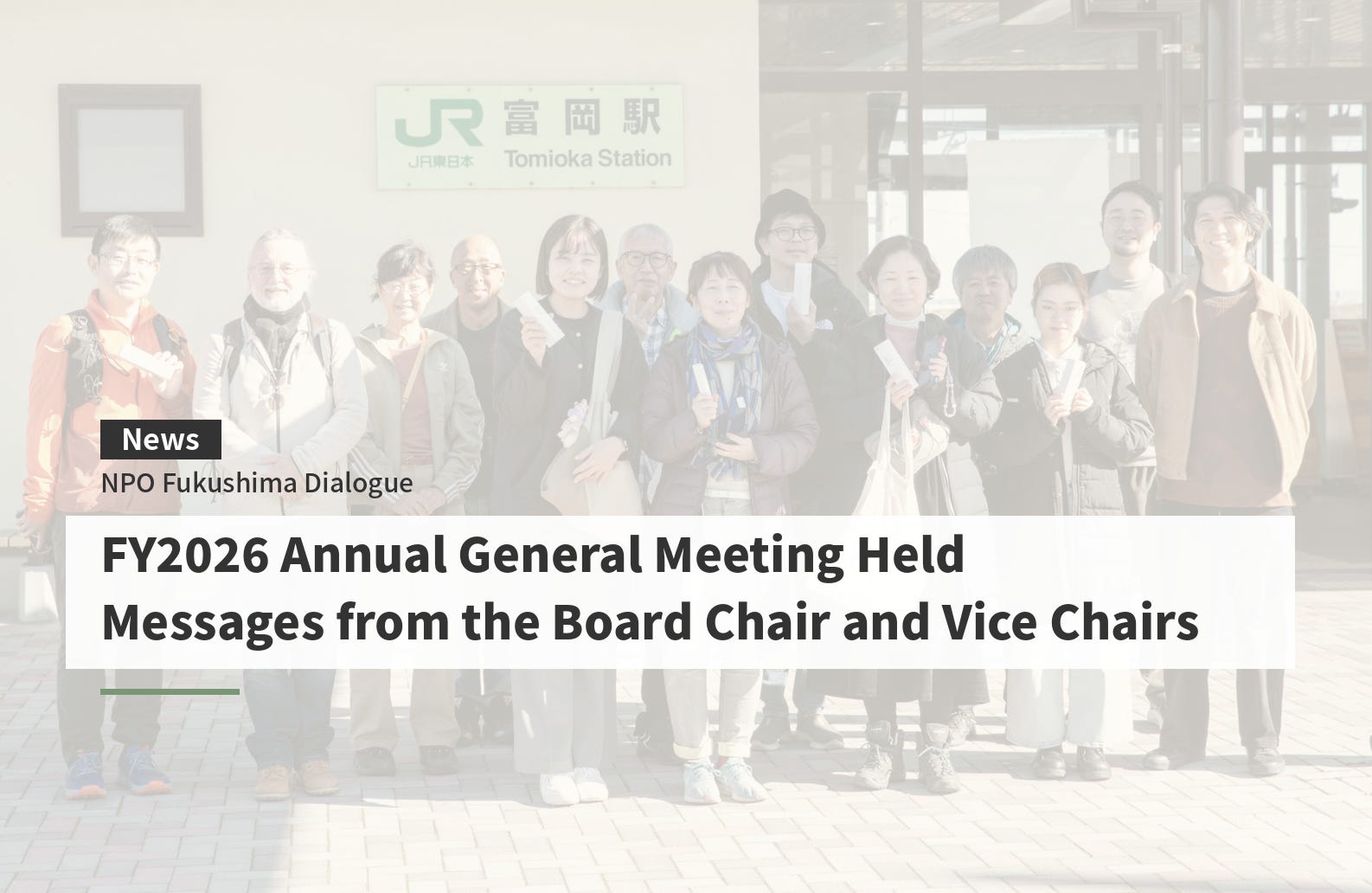
■FY2026 Annual General Meeting
On June 21, 2026, NPO Fukushima Dialogue held its FY2026 Annual General Assembly. The FY2025 Annual Report and Financial Report, as well as the FY2026 Business Plan and Budget, and he re-election of Directors and Auditors were approved.
The FY2025 Annual Report, Financial Report, and FY2026 Business Plan, Budget are available on our website. Please see the article below for details.
FY2025 Annual Report and FY2026 Business Plan
■New Officer Structure
At the General Meeting, seven Directors and two Auditors (nine officers in total) were elected for a two-year term from June 22, 2026 to June 21, 2028.
Re-elected
Ryoko Ando (Director)
Yumiko Kanai (Director)
Takahiro Hanzawa (Director)
Jacques Lochard (Director)
Eiji Hiraoka (Auditor)
Newly Appointed
Akihiko Kondo (Director)
Misaki Fukushima (Director)
Daiki Sasaki (Director)
Masahiko Nagaoka (Auditor)
Following the General Meeting, the newly elected Board of Directors convened and elected Ryoko Ando as a Board Chair and Akihiko Kondo and Daiki Sasaki, as two Vice Chairs
Messages from the Board Chair and Vice Chairs upon taking office will be added below.
Message from the Board Chair
I am honored to continue serving as Chairperson of NPO Fukushima Dialogue.
Last year marked a major turning point for our organization. First, we launched a revenue-generating research contract program and began taking steps toward building a sustainable and independent operational foundation. In addition, we established a student team consisting of undergraduate and graduate students, which has started new activities and initiatives.
In addition to organizing Dialogue events, we have engaged in a wide range of activities, including participation in academic conferences and international forums both in Japan and abroad, as well as international exchange programs. Building on these efforts, we will strive for further development through these new initiatives.
Now, as we mark 15 years since the Fukushima nuclear accident, we are committed not only to providing opportunities for younger generations to play active roles, but also to valuing the perspective of how the experiences gained can be applied to the future and transformed into new value, rather than simply passing them on.
We will also work to share the concept and practice of Co-expertise, which has been cultivated in Fukushima, with audiences both in Japan and around the world, while contributing to its wider dissemination and further development.
Ryoko Ando
Message from the Vice Chairs
I have been honored with the appointment of Vice Chairperson.
I was born in Chiba Prefecture, and the satoyama landscape of Yatsu valleys carved into the Shimofusa Plateau forms the scenery of my childhood. I have long been fond of the landscape of deciduous broadleaf forests in the Abukuma Highlands, which in some ways resemble the Yatsu landscapes. Following the Great East Japan Earthquake in 2011, I felt a strong conviction that I needed to visit Fukushima.
In May of that year, I first set foot on the affected land. Since then, while engaging in research activities commissioned by governmental and academic institutions, I have also participated in support activities in collaboration with the residents of the Yamakiya district in Kawamata Town, where Chiba University had established meaningful connections.
Through my interactions with people from a wide range of backgrounds and positions related to the nuclear disaster, I came to realize that each person holds a different worldview, and that these worldviews often do not intersect. I became convinced that dialogue is an essential means of broadening people’s perspectives and fostering empathy. It was through this realization that I became involved in Fukushima Dialogue.
During my term, I will do my utmost, however modest my contribution may be, to support the activities of the organization.
Akihiko Kondo
My name is Daiki Sasaki, and I have recently assumed the role of Vice Chairperson.
I first encountered Fukushima in 2016, after the Great East Japan Earthquake and the nuclear accident, through a university course. Later, my participation in a Dialogue event in 2022 led me to become a student member of Fukushima Dialogue.
What I find most remarkable about this organization can be summed up in a single phrase: its unassuming nature. People gather together, each responding to a question that has been posed, while others listen attentively. Participants may respond to what others have said, or they may choose not to. Nothing particularly extraordinary appears to be taking place. Yet among the participants, highly complex processes unfold.
The act of speaking about one’s own thoughts and experiences, the content that is shared, and the different experiences expressed by others all come together in dialogue. Through this exchange, participants reflect upon their own lives and come to view them from new perspectives. I believe this is one of the fundamental values of Dialogue.
I am pleased to be able to contribute, however modestly, to such activities. In addition, a student team was established in 2026. Now, fifteen years after the accident, I will strive, as one of the student members myself, to bring new energy and fresh perspectives to our organization.
Daiki Sasaki
03 対話を支える方法 | The Methods Behind Dialogue
IDPAメソッドについて(第2回)
前回のニュースレター(第25号)では、フランスでアンリ・オラニョン教授によって考案されたIDPAメソッドが、フランス南部のピレネー山脈におけるクマの再導入と人間との共生をめぐり、さまざまな関係者の合意形成にどのように用いられたかを紹介しました。
長期間にわたる一連の対話を経て、地域の関係者はクマの再導入について妥協点を見いだしました。しかし、それ以上に重要なのは、地域の野生生物をめぐる複雑で多様な関係者が関わるあらゆる問題について、話し合い、対話を継続するための仕組みを築いたことです。この仕組みは、クマが再導入された地域にちなみ「オー・ベアーン共同遺産枠組み」と呼ばれ、地域の暮らしの質を維持・向上させることを目的としています。この枠組みはこのほど設立30周年を迎え、現在、運営チームの世代交代が進められており、議論も継続しています。
また、ピレネーのクマの事例以降にIDPAアプローチを導入したフランスのほかの地域でも、複雑な課題に取り組むため、同様の方法が採用されていることは注目に値します。さらに、オラニョン教授の指導のもと、共同遺産という理念に基づいてIDPAアプローチを実践できる専門家を育成するため、学位課程と研究室を運営する専門教育研究部門がAgroParisTechに設置されました。
第2回となる本稿では、福島原発事故後に実施された一連の対話を構成する基盤となったIDPAメソッドの概要を紹介します。
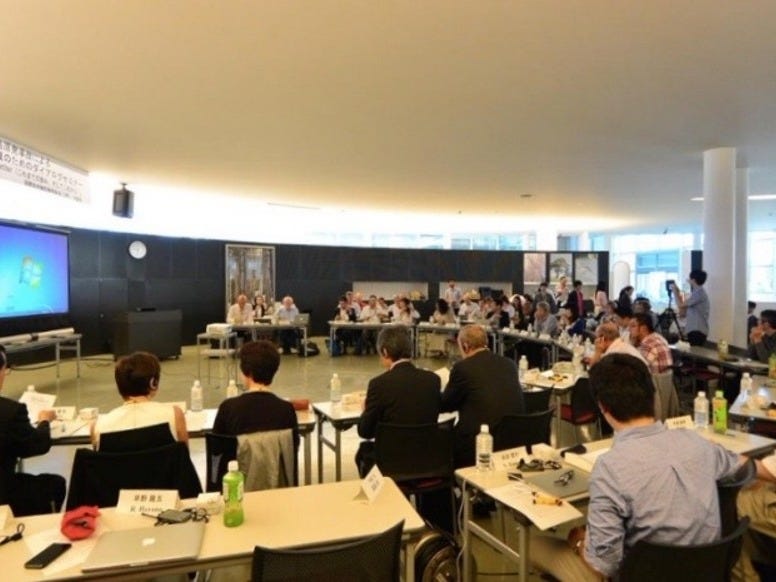
2011年11月に福島市で開催された第1回ダイアログの成功に加え、ベラルーシでIDPAメソッドを用いた経験が成果を上げたことから、ICRPのフランス側関係者は、2012年2月に伊達市で開催された第2回福島ダイアログで、このアプローチを適用することを提案しました。しかし、時間上の制約など、対話運営上避けられない条件があり、フランスで開発された本来のプロセスを調整する必要がありました。また、この手法とその目的を詳しく説明することも容易ではありませんでした。そのため、その後のすべてのダイアログでは、手法の起源に触れずに経験に即し大幅に簡略化した形が用いられました。私たちは単にこれを「対話の構造化された部分」と呼んでいました。
大切にしたのは、IDPAメソッドの根本的な精神を守ることでした。特に、すべての参加者に平等な発言時間を保障し、発言内容にかかわらず互いを尊重することを促す進行上のルールを守ることです。一人ひとりの話に耳を傾け、その言葉を尊重することは、IDPAメソッドを特徴づける倫理原則の基本です。
ICRPダイアログは、福島原発事故後の生活条件の改善を中心テーマとし、国および地域の行政機関の代表者、被災自治体の首長や専門職、大学研究者、国内外の研究機関、NGOなどが参加して開催されました。
会合は週末の2日間にわたって行われ、ベラルーシ人やノルウェー人を含む招待参加者のほか、地域・国内・海外からのオブザーバーが集まりました。ICRPのメンバーが英語を用いて進行し、各参加者には自分の考えを述べ、ほかの参加者の意見に応答する機会が与えられました。意見交換の内容は報告者がまとめ、その後、全体討議の時間が設けられました。すべてのダイアログには同時通訳が入り、映像も記録されました。
2016年初め、ダイアログに継続的に参加していた人々のグループが、ICRPにさらなる会合の開催を求めました。日本財団が全額を資金面で支援し、ICRPが進行を担い、福島県立医科大学と福島のエートスが運営面を支援する形で、2016年2月から2018年末までに8回の会合が開催されました。2019年6月には、ダイアログ継続を主な目的として、NPO法人福島ダイアログが正式に設立されました。これを皮切りに、地域住民が全面的に企画・運営する第3期のダイアログが始まり、運営体制を新たにして毎年秋以降に開催されています。
ダイアログは、事故の影響を受けた各自治体で対面開催していますが、オンラインでも視聴できます。毎回、1日目に現地視察を行い、2日目に進行役による対話の日が設けられています。各ダイアログは映像で記録され、開催後数日以内に概要と討議の全編映像がNPOのウェブサイトで公開されます。
NPO福島ダイアログで実施している簡略版IDPAメソッド
進行役が、対話のテーマに関連する質問を、参加者に投げかけることから始めます。質問は明確かつ、参加者の回答を誘導しないよう、十分に考慮されたものでなければなりません。時間の制約があるため、IDPAメソッドの4段階(Identification=特定、Diagnostic=診断、Prospective=将来展望、Actions=行動)を組み合わせて論点を整理し、明らかになった課題への対応を検討します。そして、参加者が順番に発言するラウンドを2回行います。
第1ラウンドでは、各参加者が質問に対する自分の考えを述べます。第2ラウンドでは、ほかの参加者の発言を聞いて感じたことや考えたことを述べます。公平で建設的な対話を確保するため、参加者は厳格なルールに従います。各ラウンドでは、すべての参加者に同じ持ち時間が与えられ、決められた順番で一人ずつ発言します。2回のラウンド中は、ほかの参加者による割り込みや討論は認められません。
構造化された対話に参加するのは選ばれた約10人だけではありません。構造化された対話の後には、オブザーバーも同じルールに従って発言し、グループとの意見交換に加わることができます。
なお、参加者は、発言中に互いの顔が見えるように着席します。また、参加者の匿名性に配慮しながら、発言内容を完全に追跡できる形で記録します。
NPO法人福島ダイアログは2025年12月に第27回福島ダイアログを開催し、次回第28回福島ダイアログを2026年12月5日・6日、南相馬市小高区で「地域の取り組み」をテーマに開催する予定です。
これまでのダイアログは、下のボタンからご覧いただけます。
寄稿:NPO法人福島ダイアログ理事 ジャック・ロシャール
About the IDPA method (Second episode)
In the previous NPO newsletter (Vol. 25), board Member Lochard presented how the IDPA method—developed in France by Professor Henry Ollagnon—was used to reach an agreement among various stakeholders regarding the reintroduction of bears in the Pyrénées mountains (southern France) and their coexistence with humans.
After a long series of dialogues, local stakeholders reached a compromise regarding the reintroduction of bears, but more importantly, they established a mechanism to discuss and continue the dialogue on all the complex and multi-stakeholder problems facing wildlife in the region. Called the “Common Heritage framework of the Haut Béarn” (the region where the bears were introduced) its objective is to manage the quality of life in the region.
This Framework has just celebrated its 30th anniversary: teams are currently undergoing renewal, and discussions are ongoing!
It is also worth noting that other French regions—where the IDPA approach was implemented after the bears case in the Pyrénées, have adopted a similar approach to address complex issues. Furthermore, a dedicated academic unit responsible for managing degree programs and research laboratories was established at AgroParisTech under Professor Ollagnon’s leadership to train professionals capable of implementing the IDPA approach in a common heritage spirit.
This second text aims to provide an overview of the IDPA method, which served as a structuring element for the series of dialogues organized following the Fukushima accident.
Drawing on the success of the first Dialogue meeting held in Fukushima city on November 2011, but also on their successful experience in Belarus with the IDPA method, the French representatives from ICRP proposed applying this approach during the second Fukushima dialogue, held in Date City in February 2012. However, given the constraints inherent in organizing the dialogue—particularly time limitations—it was essential to adapt the process originally developed in France. Explaining the method and its objectives in detail was also challenging. Consequently, a highly empirical and simplified version of the method was applied in all subsequent dialogues without even mentioning its origin: We were just naming it the ‘structured part of the dialogue’!
The core idea was to preserve the fundamental spirit of the IDPA method—specifically its procedural rules, which ensure equal speaking time for every participant and foster mutual respect regardless of what is said. Listening to each individual and respecting their words are fundamental aspects of the ethical principles characterizing the IDPA method.
The ICRP dialogue meetings were focused on improving living conditions after the Fukushima accident, and were held in the presence of representatives of regional and national authorities, as well as mayors and professionals from the affected localities, university researchers, national and international institutes, and NGOs.
The meetings, which were held over 2 days at weekends, gathered invited participants including Belarusians and Norwegians, local, national, and international observers. They were facilitated by ICRP members, using a common language and each participant had the opportunity to express her/his view and to react to the views of the other participants. The exchanges of views were summarized by rapporteurs after which there was a period for general discussion. All dialogue meetings were simultaneously translated and video recorded.
In early 2016, a group of regular participants to the dialogue meetings requested ICRP to hold further meetings. Entirely supported financially by the Nippon Foundation, facilitated by ICRP and logistically supported by Fukushima Medical University and the Ethos in Fukushima, 8 meetings were held between February 2016 and the end of 2018.
In June 2019 the NPO Fukushima Dialogue was officially established with the main objective to continue the Dialogue meetings. This date marks the start of the third series of dialogue meetings entirely organized by local residents, held annually from the autumn onward with a renewed organization.
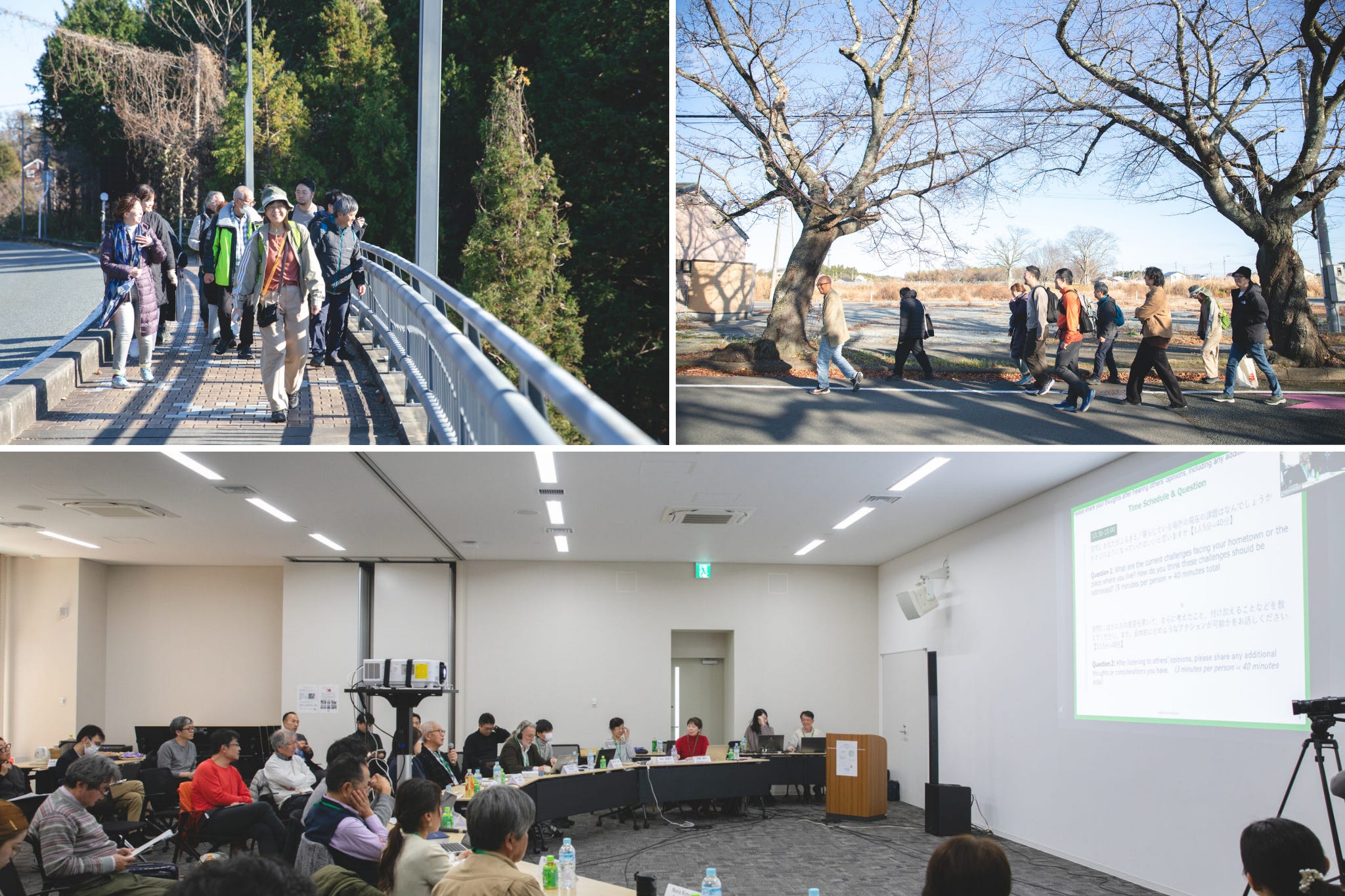
The dialogues take place in person in the various municipalities affected by the accident but can also be followed online, always including a day for site visits and a day for facilitated dialogue. Each dialogue is video-recorded and a summary is published online on the NPO’s website in the following days, along with the full video of the discussions.
The simplified version of the IDPA method
implemented during the recent NPO Dialogues
Concretely, to start the process the facilitator asks a group of selected participants a question in relation to the theme of the dialogue. The question must be clear and at the same time remains sufficiently open so as not to guide the responses of the participants. Given time constraints, the four stages of the IDPA method (Identification, Diagnostic, Prospective and Actions) are combined to characterize the issues and address the identified challenges, and two successive rounds of speaking are organized, allowing each participant to speak in turn.
During the first round each participant expresses her/his view on the question. During the second round each participant can express her/his view to what has been said by the other participants. To ensure a fair and constructive dialogue participants follow strict rules: during each round, each participant is invited to express her/his view after the other in a given limited time equal for all participants and no interruptions by other participants and no discussions are allowed during the two rounds.
Not only does the selected group of about ten people participates in the structured dialogue, but observers can also intervene at the end of the structured dialogue to engage with the group, following the same rules applied during the structured session.
It is to note that participants sit so that they can all see each other when they are speaking and a complete traceability of speeches is ensured while respecting the anonymity of the participants.
The NPO Fukushima Dialogue held the 27th Fukushima Dialogue in December 2025 and is planning to organize the 28th Fukushima Dialogue on 5 and 6 December 2026 in Odaka Ward, Minamisoma City. The theme of the event will be “Local Projects.”
Explore past Fukushima Dialogues here.
Contributor: Jacques Lochard, Board Member, NPO Fukushima Dialogue
04 地域の経験を未来へ残す | Preserving Local Experience for the Future
「原発事故後の地域の取り組み」アンケートにご協力をお願いします!
原発事故後、福島県内をはじめとする地域では、住民、地域団体、研究者、行政など多くの人々によるさまざまな取り組みが行われてきました。しかし時間の経過とともに、その記録や情報は見つけにくくなっています。
NPO福島ダイアログでは、こうした取り組みをリスト化して記録に残し、今後の研究や地域活動に役立てられる形で共有することを目指しています。大きなプロジェクトである必要はありません。「地域でこんな取り組みがあった」「自分たちがこういう活動をしていた」と思われる活動をご存じでしたら、ぜひ情報をお寄せください。
調査の背景、対象とする取り組みの範囲、お寄せいただいた情報の扱いについては、こちらの記事で詳しくご説明しています。
情報をお知らせいただく際は下のボタンのアンケートフォームからご回答いただけます。
▼
▲
Tell Us with Our Survey on Local Projects Since the Nuclear Accident!
Since the nuclear accident, a wide range of local projects have been carried out by residents, community organizations, researchers, local governments, and many others in Fukushima and beyond. However, as time passes, records and information about these projects are becoming increasingly difficult to find.
NPO Fukushima Dialogue is working to document and preserve these local projects in a searchable list that can serve as a resource for future research and community activities. The projects do not have to be large in scale. If you know of a local project in your community, or if you were involved in one yourself, we would be grateful if you could share the information with us.
The article linked here explains the background of this survey, the scope of the local projects covered, and how the information provided will be used.
To submit information, please complete the survey form using the button above.
05 最近の活動 | Recent Developments at Fukushima Dialogue
NPO福島ダイアログの最近の活動をご紹介します。タイトルをクリックすると記事をご覧いただけます。
Here are some highlights of NPO Fukushima Dialogue’s recent activities. Click on each title to read the full article.
RECENT ACTIVITIES
福島ダイアログ最近の主な動きをご紹介します。
Recent Highlights from Fukushima Dialogue
■2026年度 通常総会を行いました― 理事長・副理事長ご挨拶
■FY2026 Annual General Assembly Held | Messages from the Board Chair and Vice Chairs
■Launch of the NPOFD Student Team
■Attendance at the 15-Year Fukushima Daiichi Accident International Workshop
PAPER
フランス放射線防護学会の学術誌『 Radioprotection』 にNPO福島ダイアログの放射線測定活動についての論文が掲載されています。
Article on Fukushima Dialogue’s Radiation Measurement Activities Published in “Radioprotection”.
■Paper: The measurement activities of the non-profit organization “Fukushima dialogue” in Japan
BOOK
共同専門知(Co-Expertise)に関する書籍がオープンアクセスで刊行されました。全文無料・英語表記のみです。
New Open-Access Book on the Co-Expertise Process (Available in English)
■書籍:『The Co-Expertise Process』刊行のお知らせ
■New Book Published: The Co-Expertise Process
REPORT / VIDEO
ANCCLIより提供された、福島訪問時の証言動画やフランスの原子力制度・法規制に関する資料・動画をご紹介します。
Videos and Materials from ANCCLI: Fukushima Testimonies and French Nuclear Governance
■ANCCLI会長講演動画:仏CLI制度と透明性の意義(字幕付)
■ANCCLI資料 原子力の透明性と安全に関する法律(TSN法)20年の歴史
■ANCCLI Releases Report and Video on Its 2024 Fukushima Mission
■ANCCLI Video: The Role and Meaning of France’s CLI System
■20 Years of the 2006 TSN Act in France by ANCCLI
05 あとがき | Final Thoughts
新年度を迎えてからあっという間に5か月がすぎましたが、この間、様々な活動に取り組んできました。今年発足した学生チームも、毎月必ず研究発表を行うなど精力的に活動しています。
また、10月にはNPO福島ダイアログとパートナー団体と共に、大熊町でトレイル企画、12月には第28回福島ダイアログの開催を「地域の取り組み」というテーマで南相馬市小高区の浮舟文化会館で行うことが決まりました。詳細については今後、ニュースレターやウェブサイト、各SNSで随時お知らせしてまいります。どうぞお楽しみに!
世界規模の異常気象や災害発生のニュースを目にするたび、落ち着かない気持ちになることもありますが、地に足をつけ、私たちができることを見失わないように、一歩ずつ進んでいきたいと思います。(門馬)
Five months have already passed since the start of the new fiscal year. During this time, we have been involved in a wide range of activities. Our student team, which was launched this year, has also been actively engaged in its work, giving research presentations every month.
Looking ahead, in October, Fukushima Dialogue and its partner organizations will host a trail event in Okuma Town. In December, the 28th Fukushima Dialogue will be held at Ukifune Cultural Hall in Odaka Ward, Minamisoma City, under the theme of “Local Projects.” More details will be shared through our newsletter, website, and social media channels in the coming months, so please stay tuned.
News of extreme weather events and disasters around the world can sometimes leave us feeling unsettled. Nevertheless, we hope to remain grounded, stay focused on what we can do, and continue moving forward one step at a time.
Maiko Monma