


目次 Contents
理事長挨拶 Message from the Chair
第27回福島ダイアログ開催レポート Overview of the 27th Fukushima Dialogue
ICRP/NPO福島ダイアログ共同ウェビナー Joint ICRP & NPO Fukushima Dialogue Webinar
概念と言葉の意味を知る Shared Concepts and Language
福島イベント情報 Fukushima Event Information
あとがき Afterword
1.理事長挨拶 Message from the Chair
3月で福島復興から15年を迎えます。私たちも,ICRPと共同で福島の地元の方たちをお招きするウェビナーを12日開催します。福島でいまなにがどうなっているのか,現地で暮らす方達の証言を通して直接聞ける貴重な機会です。ぜひ,ICRPのサイトから視聴ご登録ください。
March marks the fifteenth anniversary of the Fukushima accident. We too will be hosting a webinar on the 12th, in collaboration with the ICRP, to invite local residents from Fukushima. This is a valuable opportunity to hear directly from those living in the area about the current situation in Fukushima through their testimonies. We encourage you to register to view it via the ICRP website.
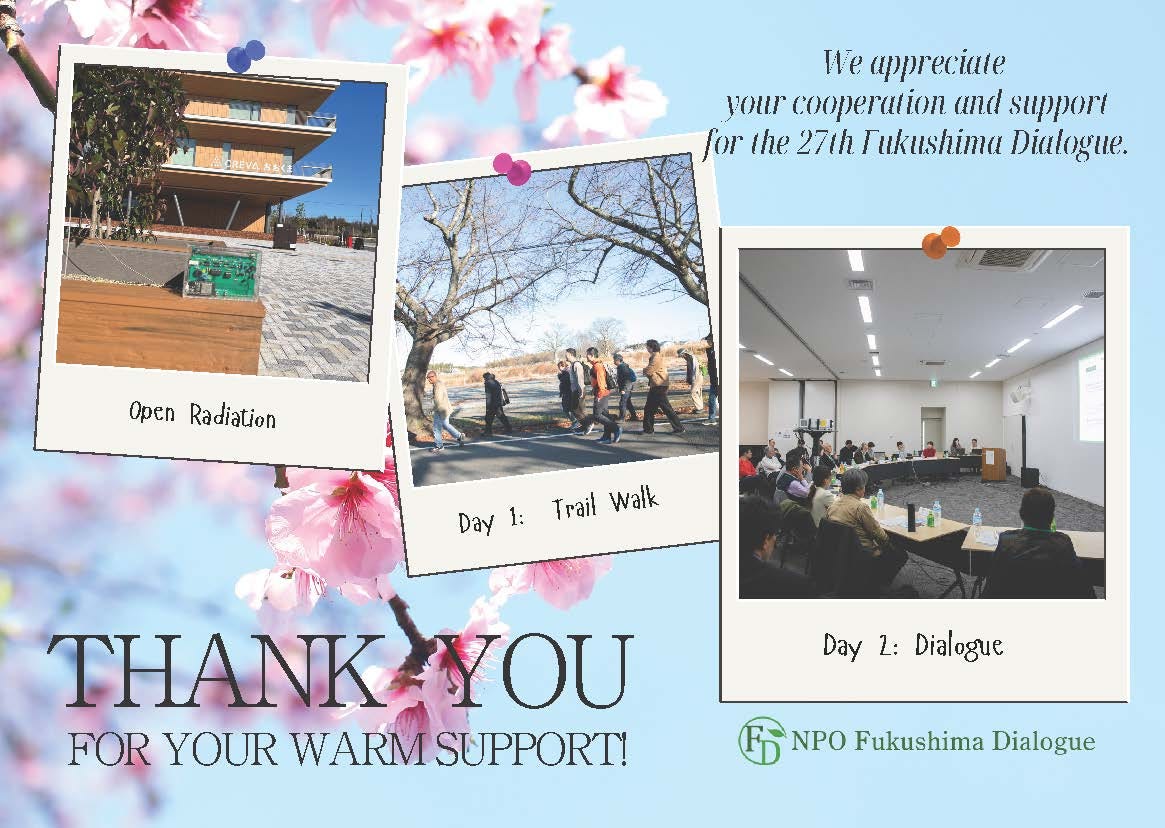
2.第27回福島ダイアログ「ふるさとへの思い ― 私たちはどこから来て、どこへゆくのか ―福島の声」開催レポート
福島県双葉郡大熊町の「CREVAおおくま」で第27回福島ダイアログが、2025年12月6日・7日に開催されました。その概要をお伝えします。
■12/6 1日目 トレイル・ウォークで現地を体感
富岡駅から夜ノ森駅までの約5キロを歩きながら、参加者同士で放射線量の測定や現地の環境について話し合いながらのトレイル・ウォークを実施しました。歩くことで、現場の空気や風景、日常の感覚に直に触れながら、土地と人とのつながりについて考える機会となりました。
■12/7 2日目 多様な「ふるさと」の声
午前は,まず5本の発表が行われました。前日のトレイル・ウォークでの様子を振り返り、前日実測した放射線量を地図に落とし込み、放射線量の推移などについてASNR(フランス)のジャン・マルク・ベルソ氏に説明をいただき、地域の現状を網羅的に理解しました。その後,赤宇木地区の歴史について赤宇木記録紙編集委員会副委員長の今野邦彦さんに、作成した記録誌にこめた郷土への愛着と,地域の歴史を次世代に継承していくことの重要性についてお話しいただきました。また、ノルウェーからはビデオ参加で、ノルウェー・サーミ議会議長のインガー・マリット・エイラ=アーレンさんにチェルノブイリ原発事故以降のサーミ民族の伝統的な生活と放射線との関わりについてお話しいただきました。
午後の対話セッションでは、震災後の避難を経験し元の土地に戻った方、長く避難生活を送り今も他地域で暮らす方、震災を直接経験していない若い世代など、多様な立場の人々が「ふるさととは何か」という問いを通じて率直な思いを共有しました。
語られた内容をいくつか抜粋します。
避難指示が解除されている地域でも、基盤整備や交通アクセスが十分でないため、多くの住民が戻れていない現実がある。
戻った人々は日常で人と話す機会が少なく、孤立感を抱えることがある一方、震災の記憶は今なお鮮明に残っている。
若い世代や震災を知らない人々は震災から遠ざかりつつあり、災害前にあった町の文化や個性が失われていくことへの懸念と震災前の町の記憶を継承することの重要性が語られた。
地域内の分断や交通手段が限られた高齢者コミュニティの困難さ、さらには中間貯蔵施設周辺でもともとの土地の所有者が所有権を手放しつつある現状に対する危機感について語られた。
国や自治体の政策が住民の実感を十分に反映していないという指摘。もともとの住民や移住してきた住民の個々の状況が十分に議論されず、移住政策などの拙速な復興策にすすんでいる懸念が浮き彫りになった。
詳細はこちらの議論要旨でご覧いただけます。現在の被災地からの声がわかりやすくまとまっていますので、ぜひご覧ください。
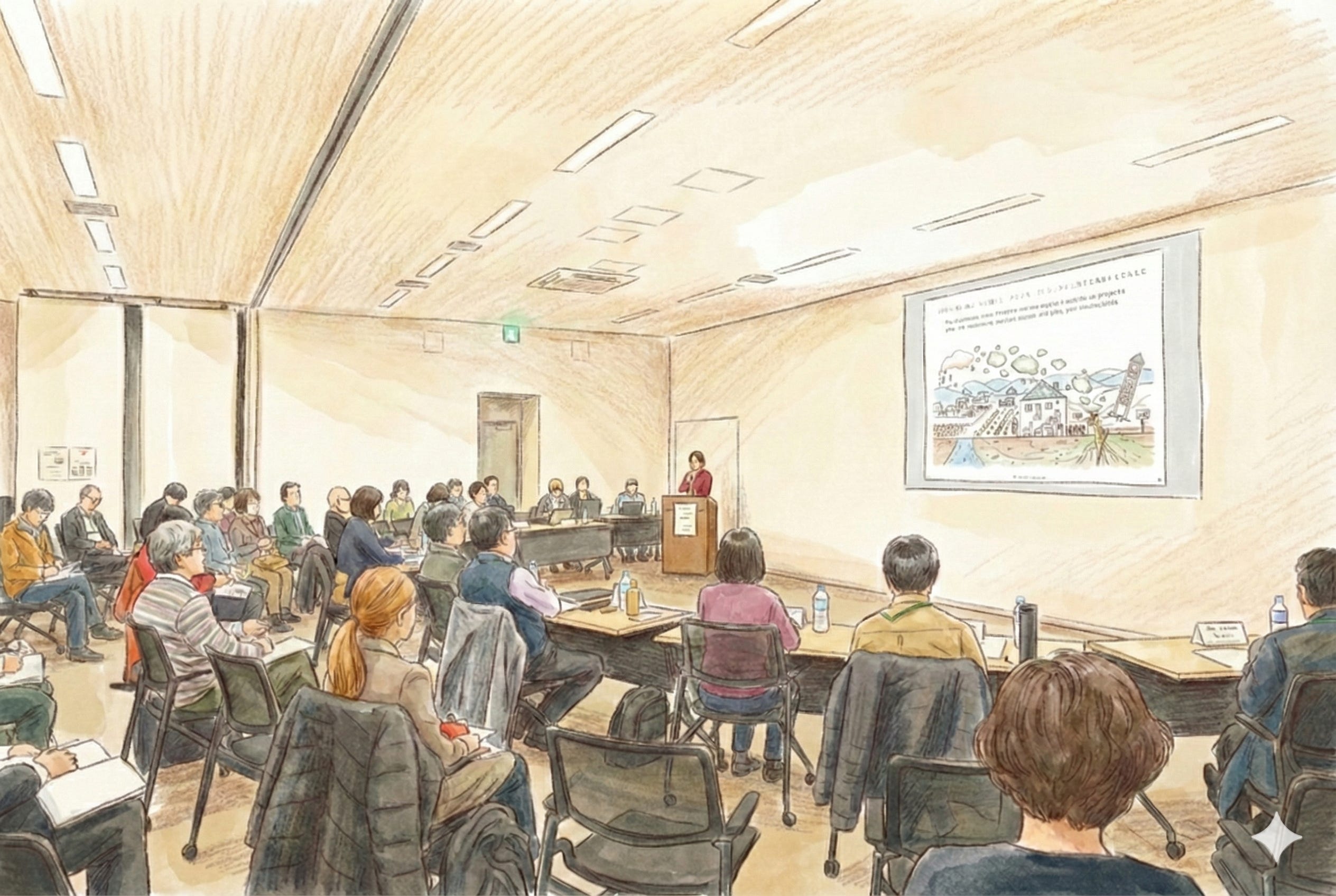
■ 「ふるさと」とはなにか
対話の中で繰り返し語られたのは、物理的な場所としての「ふるさと」だけではなく、そこで育まれてきた文化、生活、コミュニティ、記憶といった多層的な価値についてでした。避難・帰還・移住という異なる経験を持つ人々が集う福島では、単一の答えに収まらない複雑な思いと課題があり、これらは、地域の歴史やアイデンティティのあり方、さらには未来の暮らし方を考える上で欠かせない視点となります。対話の中で苦しい胸の内や地域の状況が語られる一方で、地元に戻り、今の生活を楽しむことに注力しているといった声も聞かれ、個人のできる形で生活を取り戻し、ふるさとに向き合い続ける様子が語られたことも印象に残りました。
■最後に
このダイアログを通じて共有された「声」は、復興が単にインフラ整備や人口減に対する移住促進といったハード面だけではなく、日常生活や人々の心のつながりといった側面まで含めて考える必要があることを改めて示しました。震災と原発事故から間もなく15年。今一度「ふるさと」の取り戻すべき姿、あるべき姿を再考するときなのかもしれません。
開催にあたり、会場・オンラインでご参加いただいた皆さま、そして支援くださった方々に改めまして、心よりお礼申し上げます。
■収支報告
開催における収支報告はこちらからご覧ください。


Overview of the 27th Fukushima Dialogue
The 27th Fukushima Dialogue was held on December 6–7, 2025, at CREVA Okuma in Okuma Town, Futaba District, Fukushima Prefecture. Below is an overview of the two-day program.
December 6 – Day 1|Experiencing the Area through a Trail Walk
On the first day, participants took part in a trail walk of approximately five kilometers from JR Tomioka Station to JR Yonomori Station. While walking together, they measured radiation levels and exchanged views on the surrounding environment.
By moving through the landscape on foot, participants were able to directly experience the atmosphere, scenery, and everyday feel of the area. This provided an opportunity to reflect on the relationship between the land and the people who live there.
December 7 – Day 2|Diverse Voices on “Furusato” (Hometown)
The morning session began with five presentations. Reflecting on the previous day’s trail walk, radiation measurements taken on site were plotted on maps, and trends in radiation levels were explained by Jean-Marc Bertho of ASNR, France. This helped participants gain a comprehensive understanding of the current situation in the region.
Next, Mr. Kunihiko Konno, Vice Chair of the Akōgi District Records Editorial Committee, spoke about the history of the Akōgi area. He shared the deep attachment to the local community reflected in the records they compiled, as well as the importance of passing regional history on to future generations.
From Norway, Ms. Inger-Marit Eira-Åhren, President of the Sámi Parliament, joined the session by video and spoke about the relationship between radiation exposure and the traditional way of life of the Sámi people following the Chornobyl nuclear accident.
In the afternoon dialogue session, participants from diverse backgrounds shared their candid thoughts around the question, “What does ‘furusato’ mean to you?” These included people who experienced evacuation after the disaster and later returned to their original communities, those who spent long years in evacuation and continue to live elsewhere, and younger generations who did not directly experience the disaster.
Some of the key points raised during the dialogue included:
Even in areas where evacuation orders have been lifted, insufficient infrastructure and limited transportation access prevent many residents from returning.
Those who have returned often have fewer opportunities for everyday social interaction and may feel isolated, while memories of the disaster remain vivid.
Younger generations and those without direct experience of the disaster are becoming increasingly distant from it, raising concerns about the loss of pre-disaster culture and local identity, and highlighting the importance of passing on these memories.
Participants spoke of divisions within communities, the difficulties faced by elderly residents with limited mobility, and growing concerns about original landowners relinquishing land ownership around the interim storage facilities.
There were also critical observations that national and local policies do not always reflect residents’ lived realities, with concerns that reconstruction measures—such as relocation policies—are being pursued without sufficient discussion of the diverse circumstances of both long-time residents and newcomers.
A detailed summary of the discussions is available at the link below. It provides a clear overview of voices from the affected areas today, and we encourage you to read it.
Discussion Summary|The 27th Fukushima Dialogue
“Thoughts on Our Homeland — Where Do We Come From, and Where Are We Going? — Voices from Fukushima”
What Is “Furusato”?
Throughout the dialogue, participants repeatedly emphasized that furusato is not merely a physical place. Rather, it encompasses multiple layers of value, including culture, everyday life, community ties, and shared memories nurtured over time.
In Fukushima, where people with different experiences—evacuation, return, and relocation—come together, feelings and challenges surrounding furusato are complex and cannot be reduced to a single answer. These perspectives are essential when considering regional history, identity, and future ways of living.
While participants shared painful emotions and difficult realities, there were also voices describing a conscious focus on enjoying life after returning home. It was striking to hear how individuals, each in their own way, are reclaiming their daily lives and continuing to engage with their furusato.
In Closing
The voices shared through this Dialogue reaffirmed that recovery cannot be understood solely in terms of physical reconstruction or population-based relocation policies. It must also encompass everyday life and the human connections that sustain communities.
Nearly fifteen years have passed since the earthquake and nuclear accident. This may be a moment to once again reflect on what kind of furusato should be restored—and what it should look like going forward.
We would like to express our sincere gratitude to all those who participated on site and online, as well as to everyone who supported the event.
Financial Report
The financial report for the event is available at the link below.
The 27th Fukushima Dialogue – Financial Report
3.ICRP・NPO福島ダイアログ共同ウェビナー JOINT ICRP & NPO Fukushima Dialogue Webinar
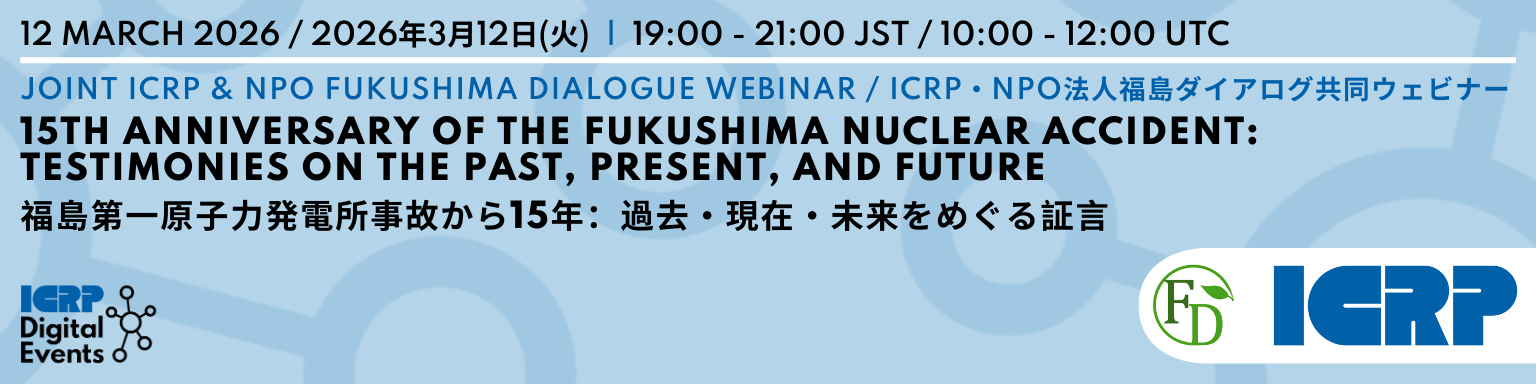
今年3月、福島第一原子力発電所事故から15年を迎えます。
時間の経過とともに、被災地の環境や暮らしは大きく変化してきましたが、今なお避難区域が残る地域や、新たな課題も存在しています。
3月12日(火)の19時からICRPとNPO福島ダイアログが共同開催するオンラインウェビナーでは、事故から15年が経過した現在の福島について、県内5名の住民の方々より、それぞれの立場から、これまでの歩みや今感じていることを語っていただく予定です。
当日のプログラム概要
19:00~19:30 開会挨拶・趣旨説明・末続ビデオの紹介
19:30~19:40 末続のビデオ上映
19:40~20:30 5名のスピーカーによる証言セッション(1人10分)
20:30~20:50 質疑応答
20:50~21:00 まとめ・クロージング
スピーカー *敬称略
・廣野晶彦(山木屋・あぶくまカットフラワー)
・木村紀夫(大熊町・一般社団法人大熊未来塾)
・青木淑子(富岡町311を語る会)
・三瓶春江(浪江町津島)*オンライン参加
・阿部翔太郎(大熊町・株式会社 ReFruit)
2026年3月12日(木)19:00~21:00(日本時間)にオンラインで開催します。 視聴にはICRPウェブサイトの「Register here」から事前登録が必要となります。登録時に表示される寄付は任意で、無料視聴も可能です。
福島の「いま」と「これから」を考える機会として、ぜひ以下のボタンから登録し、ご視聴ください。
Announcement of the JOINT ICRP & NPO Fukushima Dialogue Webinar
This March marks 15 years since the accident at the Tokyo Electric Power Company’s Fukushima Daiichi Nuclear Power Plant.
Over time, the environment and daily life in the affected areas have changed significantly. At the same time, there are still regions where evacuation orders remain in place, and new challenges continue to emerge.
In the online webinar jointly organized by ICRP and NPO Fukushima Dialogue on March 12 starting at 10:00 (UTC), five residents from Fukushima Prefecture will share their experiences. From their respective perspectives, they will speak about the paths they have walked so far and how they feel today.
[Program Overview (All times in UTC)]
10:00–10:30
Opening Remarks, Introduction to the Purpose of the Webinar, and Introduction to the Suetsugi Video
10:30–10:40
Testimony from Suetsugi Video
10:40–11:30
Testimony Session by Five Speakers (10 minutes each)
11:30–11:50
Q&A Session
11:50–12:00
Closing Session
[Five Resident Speakers]
-Akihiko Hirono (Yamkiya, Abukuma Cut Flowers)
-Norio Kimura (Okuma, Okuma Future School)
-Yoshiko Aoki (Tomioka, 2011.3.11 Tomioka Kataribe NPO)
-Harue Sanpei (Tsushima, Namie-town)* Online participation
-Shotaro Abe (Okuma, ReFruit LTD.)
The webinar will be held online on Thursday, March 12, 2026, 10:00 - 12:00 UTC /06:00 - 08:00 EDT / 11:00 - 13:00 CET.
Advance registration is required via the “Register here” link on the ICRP website. The donation option shown during registration is voluntary, and free participation is also available.
We invite you to take this opportunity to reflect on Fukushima’s “present” and “future” and to register using the button below to join the webinar.
4. 概念とことばの意味を知る Shared Concepts and Language
~IDPAメソッドについて(第1回)
福島ダイアログでは,IDPAメソッドという方法論に基づいて対話のファシリテーションを行っています。その起源と内容について解説します。
IDPAプロセスは、1990年代初頭に、農学者であるアンリ・オラニョン(Henry Ollagnon)教授によって開発されました。これは、彼がアグロパリテック(旧・パリ国立農業学院グリニョン校)に設立した研究・教育ユニット「生きたシステムのマネジメントと遺産戦略(Management of Living Systems and Heritage Strategies)」の活動の一環として生まれたものです。
IDPAメソッドは、複雑な課題に関わる利害関係者それぞれの視点を、構造的かつ公平な形で共有することを目的とした対話のためのツールです。
このメソッドは、「識別(Identification)」「診断(Diagnosis)」「展望(Prospective)」「行動(Actions)」という4つのステップ(IDPA)から構成されています。参加者同士が互いに積極的に耳を傾けることで、問題の本質や背景にある論点をより深く理解し、状況を改善するための具体的な行動を見いだすことが可能になります。
私が初めてIDPAメソッドに出会ったのは、1990年代初頭、チェルノブイリ原発事故で汚染されたベラルーシの地域で実施される予定だったETHOSプロジェクトの準備段階でした。アンリ・オラニョンは、その後20年以上にわたって共に活動することになる専門家・実務家の小さなグループへの参加を快く引き受けてくれました。
ある会合の中で、彼はIDPAの目的を紹介し、このプロセスがベラルーシの状況にどのように応用できるかを説明しました。その際の具体例として、当時彼自身が南フランスで進行役を務めていたIDPAプロセスを紹介してくれたのです。
昨年11月、私は長崎大学の学生たちとともに浜通りを訪れ、福島原発事故後の復興過程における現在の課題を伝えました。その際、福島県内で多くのクマが出没しているという話を聞き、最初は正直なところ半信半疑で、思わず笑ってしまいました。しかし、双葉の中間貯蔵施設を訪れた際、周辺にクマが出没する可能性があるためバスから降りることが許されなかったことで、この問題を現実のものとして受け止めるようになりました。
この状況は、私がかつてIDPAメソッドに出会ったときのことを思い出させました。というのも、アンリ・オラニョンがIDPAの仕組みを説明する際に用いた事例が、1990年代初頭にフランスとスペインの国境に位置するピレネー山脈で進められた「クマの再導入」をめぐる問題だったからです。
この問題は極めて複雑で、多くの関係者が真っ向から対立する意見を持っていました。環境保護団体は、生物多様性を守るためにスロベニアからクマを導入し、場合によっては牧畜そのものを見直すべきだと主張しました。一方、羊飼いたちは当然ながら強い懸念を示し、狩猟者はクマをすべて駆除すべきだと考えていました。専門家の間でも意見は割れ、政治家たちは判断をためらっていました。
IDPAメソッドは、このようにクマの再導入問題のような複雑で対立を伴う状況において、対話と合意形成、さらには紛争解決を促進するために設計された手法です。その後1990年代初頭のフランスでは、アルザス地方の地下水管理やアルプス山脈における雪崩対策といった、強い対立を含む課題にも応用されました。
本来のIDPAメソッドは、以下の4つのステップで構成されています。ここでは、ピレネー山脈のクマ問題を例に説明します。
第1段階:識別(Identification)
農家、狩猟者、選挙で選ばれた自治体関係者、各種団体、専門家など、すべての関係者の視点を集め、整理する段階です。それぞれが自らの認識、不安、期待を表明し、問題の所在や関係者、相互関係を明らかにします。例えば、農家はクマによる被害への懸念を述べ、環境団体は生物多様性保全の緊急性を訴え、政治家は地域社会に生じている緊張を指摘しました。
第2段階:診断(Diagnosis)
クマが牧畜に与える影響、生物多様性における役割、制度的枠組みなど、関連する要素を分析し、問題の根本原因や相互作用を明らかにします。この診断により、近親交配がクマ個体群の存続を脅かしていること、また家畜を守る現行の対策が不十分であることが示されました。
第3段階:展望(Prospective)
将来の展開を見据え、いくつかのシナリオを描きます。
・現状維持シナリオ:大きな変更を加えず、現在の傾向が続く場合
・否定的シナリオ:クマが消滅する、あるいは牧畜が放棄される場合
・肯定的シナリオ:適切な対策により、人とクマの共存が実現する場合
第4段階:行動(Actions)
状況の変化に応じたフォローアップや調整も含め、具体的な解決策と行動計画を策定します。
ピレネー山脈のクマ問題では、IDPAプロセスを通じて一連の行動案がまとめられ、フランス政府と関係自治体との間で憲章が締結されました。しかし、議論の極端な対立や、地方・国レベルにおける政治的立場の曖昧さもあり、この手法だけで緊張を完全に解消するには至りませんでした。それでもIDPAは、「聴くこと」「分析すること」「先を見通すこと」「行動すること」を組み合わせることで、複雑な課題に向き合うための厳密な枠組みを提供したと言えます。興味深いことに、IDPAの経験から30年が経った現在も地域の緊張は残っているものの、人とクマの共存に向けて一定の前進は見られています。
次号のNPOニュースレターでは、IDPAメソッドが福島ダイアログの中で15年にわたりどのように活用されてきたのか、また、時間的制約の中でもその精神、特に基盤となる倫理的価値を失わずに、どのような工夫がなされてきたのかをご紹介する予定です。
About the IDPA method (First episode)
The Fukushima Dialogue facilitates discussions based on the IDPA Methodology. This section explains its origins and content.
The IDPA process has been developed in the early 90s by Henry Ollagnon, Professor of agronomy, as part of the research and training unit “Management of Living Systems and Heritage Strategies” he created at AgroParisTech (formerly the National Agronomic Institute of Paris-Grignon). The IDPA method is a tool at the service of the sharing of the points of view of the stakeholders concerned by a problematic situation in a structured and fair way.
Based on 4 steps called Identification, Diagnostic , Prospective and Actions, (IDPA) the method allows all the participants involved in the process, though an active listening of each other, to better understand what is at stake with the problem and identify possible actions to improve the situation.
I met first the IDPA method at the time of the preparation in the early 90s of the ETHOS project to be implemented in the contaminated territories of Belarus by the Chornobyl accident. Henri Ollagnon who accepted to join the small group of experts and professionals who would go on to work together for over 20 years. During a meeing, he introduced the method’s objective and explained how the process could potentially be applied in Belarus. To illustrate his point, he presented the IDPA process he was then facilitating in the south of France.
When I came last November in Hamadori with my students at Nagasaki University to introduce them with the current challenges of the recovery process after the Fukushima accident, I was surprised to learn that many bears were wandering in the Prefecture. First I smiled and did not take the news seriously, but when we visited the Futaba interim storage facility and we were not allowed to get off the bus because of the possible presence of bears in the vicinity, I started to take the issue more seriously.
In fact, this situation reminded me of my discovery of the IDPA method a long time ago, because the case Henry Ollagnon used to illustrate how it works was dealing with the re-introduction of bears in the Pyrenees mountains in the early 90s, which form the border between France and Spain. This was indeed a very complex issue, with many stakeholders holding deeply opposed views concerning how to manage the bears: environmentalists were in favor of introducing bears from Slovenia and even abandoning the pastoralism; sheep farmers were of course reluctant, to say the least; hunters wanted to kill all the bears; experts were undecided about what to do; and politicians were hesitating….
Basically, the IDPA method is a tool which has been designed to facilitate consultation and conflict resolution in complex situation such as the reintroduction of the bears in the Pyrenees mountains. The method was also applied later on to find a way to manage highly conflicting issues in France in the early 90s as for example the water table in the Alsace or the avalanches in the Alps. In its original version it is articulated in 4 steps as described below using the case of the bears as an example:
The first one (Identification) aims at gathering and clarifying the viewpoints of all stakeholders (farmers, hunters, elected officials, associations, experts) during which each actor expresses his perception, fears, and expectations, identifying the problems, the concerned actors and their interrelations. For example, farmers expressed their concerns about bear attacks , while environmental groups stressed the urgent need to save the species to preserve the biodiversity and the politicians underlined the social tensions in the region.
The second step (Diagnosis) aims at analyzing the roots of the problems and the dynamics at stake between relevant issues such as the impact of bears on pastoralism, the role of bears in biodiversity, and the role of the regulatory framework. The diagnosis revealed that consanguinity threatened the viability of the bear population and that current livestock protection measures were insufficient.
The third step (Prospective) aims at imagining scenarios for the evolution of the situation by anticipating possible trends:
Status quo: Continuation of the current trend without changes.
Negative scenario: Disappearance of the bears or the abandonment of pastoralism,
Positive scenario: Successful co-habitation thanks to adapted actions
The fourth step (Actions) aims at defining solutions by developing possible actions, including their follow-up and adjustments, in case the situation evolves.
For the bear issue in the Pyrenees, the IDPA resulted in a set of proposed actions and the signature of a charter between the French state and the concerned municipalities. Despite its usefulness the implementation of the method did not succeed in solving the tensions, notably because of the polarization of the debate and the ambiguities in the political positions of local and national authorities. However, the IDPA has demonstrated its rigor in tackling complex issues by combining listening, analysis, anticipation and action. It is interesting to note that 30 years after the IDPA experience the local tensions are still present, even if some progress has been made in the cohabitation between bears and local actors.
In the next NPO newsletter we will present how the IDPA method has been used for 15 years in the Fukushima Dialogue, and we will describe how it has been adapted to cope with the time constraints without losing its spirit, particularly the ethical values on which it is founded.
5.福島イベント情報 Fukushima Event information
震災から15年となる3月11日、福島県内では追悼と復興への思いを共有する3.11 ふくしま追悼復興祈念行事が行われます。詳細はこちらからご覧ください。
3.11 Fukushima Memorial and Recovery Commemorative Events
On March 11, marking 15 years since the Great East Japan Earthquake, various events will be held across Fukushima Prefecture to share remembrance and hopes for recovery.
For further details, please refer to the following page
6.あとがき Afterword
今年度最後のニュースレターはいかがでしたでしょうか。
来月3月11日は東日本大震災と東京電力福島第一原子力発電所の事故から15年となります。
長かったようでもあり、あっという間でもあった15年です。その間に何が変わり、何が変わらずにここまで来たのか、これからもしっかりと見つめ問い続けていきたいと思います。
NPO福島ダイアログでは、対話を何より大切にしています。これまで続けてきた「福島ダイアログ」の取り組みに加え、今後はICRPとの共同ウェビナーをはじめ、海外の団体や福島県のさまざまな団体との連携をさらに深め、新たな取り組みも視野に活動の幅を広げていく予定です。
今後とも私たちの活動を見守っていただき、応援をいただけますと幸いです。
さて、日本では3月3日に女の子の健やかな成長を祈るひなまつりがあります。我が子はすっかり成長し以前ほどの関心はなくなったようですが、今年も若い世代への願いとエールを込めて飾りました。初めて飾ってから、こちらも15年。これから先の年月も、私たちのことを静かに見守ってくれることを願っています。


How did you find our final newsletter of the fiscal year?
On March 11 next month, we will mark 15 years since the Great East Japan Earthquake and the accident at the Tokyo Electric Power Company’s Fukushima Daiichi Nuclear Power Plant.
It has been 15 years that feel both long and short. During this time, I find myself continuing to reflect on what has changed, what has remained unchanged, and how we have arrived where we are today. These are questions I believe we must keep looking at carefully and ask ourselves as we move forward.
At NPO Fukushima Dialogue, we place great importance on dialogue. Alongside our ongoing Fukushima Dialogue activities, we plan to further expand our efforts through new initiatives, including a forthcoming joint webinar with ICRP and also strengthened collaboration with international organizations and other groups active within Fukushima Prefecture. By valuing these connections, we hope to continue widening the scope of our activities in the years ahead.
We would be grateful if you continue to follow our work and support us.
In Japan, March 3 is Hinamatsuri, a traditional festival that celebrates the healthy growth of girls. The photo shows the hina dolls displayed in my home. My child has grown up and no longer shows much interest, but this year as well, I displayed them with wishes and encouragement for the younger generation. It has also been 15 years since I first set them out. As I do so again this year, I hope they will continue to watch over us in the years to come.